











Why Curtain Controls Are Essential to Modern Smart Buildings
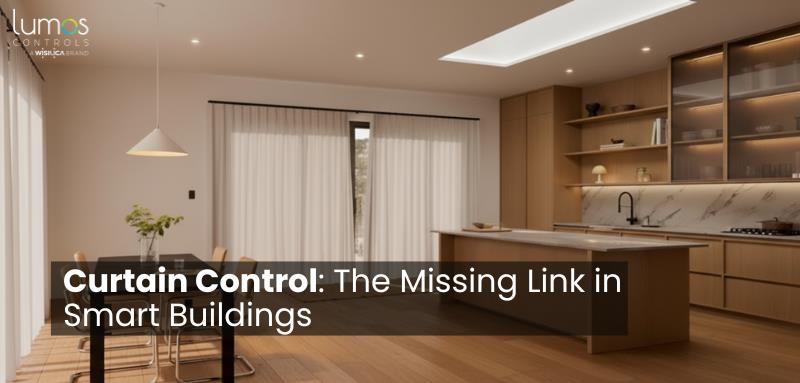
Smart buildings are designed to optimize energy, comfort, efficiency, and user experience. When people think about smart building systems, they often picture lighting automation, HVAC controls, access management, and energy dashboards.
But there is one critical element that directly impacts all of these systems — and it’s often overlooked:
Curtain and blind automation.
In today’s intelligent environments, curtain controls are not just aesthetic additions. They are dynamic building components that influence daylight management, thermal comfort, privacy, and overall operational efficiency.
Smart Buildings Begin at the Window
Natural daylight is one of the most powerful environmental factors inside any building. It enhances well-being, improves mood, and reduces the need for artificial lighting. However, when unmanaged, it can also create serious challenges:
- Glare on screens
- Uneven lighting levels
- Increased cooling loads
- Thermal discomfort
- Privacy concerns
Without control, sunlight becomes unpredictable. With automation, it becomes an asset.
Smart curtain systems transform windows into responsive architectural elements that actively contribute to building performance.
Energy Efficiency Through Intelligent Daylight Management
Energy optimization is a core objective of smart building design. Lighting and HVAC systems account for a significant portion of operational energy consumption. Curtain automation directly influences both.
By integrating intelligent curtain controls, buildings can:
- Reduce artificial lighting during peak daylight hours
- Minimize solar heat gain during summer
- Retain indoor warmth during cooler months
- Lower HVAC demand
- Decrease overall energy costs
When curtains automatically respond to time schedules, daylight sensors, or occupancy patterns, buildings operate more efficiently without manual intervention.
Instead of reacting to environmental changes, the building anticipates and adjusts.
Enhancing Occupant Comfort and Productivity
Comfort is central to modern workspace and hospitality design. Uncontrolled daylight can cause glare, eye strain, and fluctuating indoor temperatures — all of which impact productivity and satisfaction.
Automated curtain systems help maintain balanced indoor conditions by:
- Controlling glare on screens
- Stabilizing indoor brightness levels
- Supporting consistent visual comfort
- Improving guest and employee experience
In office environments, this means better focus and reduced eye fatigue. In hospitality spaces, it enhances ambience and guest comfort. In educational institutions, it creates improved learning environments.
Curtain automation contributes directly to human-centric building design.
Integrated Scene Control and Space Flexibility
Modern buildings require adaptable spaces. Conference rooms, auditoriums, hotel suites, and collaborative workspaces must transition smoothly between different modes.
Presentation mode.
Meeting mode.
Privacy mode.
After-hours mode.
When curtain controls are integrated into the broader smart building ecosystem, they become part of coordinated automation strategies.
Lights adjust.
Curtains respond.
Spaces transform instantly.
All managed through centralized dashboards, mobile applications, or scheduled automation.
This level of integration ensures buildings are not just connected — they are responsive.
Privacy, Security, and Operational Intelligence
Curtains also play a critical role in privacy and operational management.
Automated systems can:
- Close after business hours
- Open at the start of the day
- Adjust based on occupancy
- Protect interiors from excessive sunlight
For facility managers, centralized curtain control provides:
- Real-time visibility across zones
- Remote access and management
- Automated scheduling
- Reduced manual intervention
In large commercial buildings, manual curtain operation is inefficient and inconsistent. Smart curtain controllers bring structure, reliability, and control to daily operations.
A Holistic Approach to Smart Building Design
True smart buildings do not treat systems as isolated components. Instead, they integrate:
- Lighting
- HVAC
- Occupancy
- Energy analytics
- Environmental comfort
- Daylight management
Curtain controls act as the bridge between architecture and automation. They connect natural light with artificial systems and help buildings respond intelligently to changing conditions.
When properly integrated, curtain automation elevates building performance from functional to strategic.
Smart Curtain Automation with Lumos Controls
With advanced solutions like Radiar CF, Radiar CB, and Radiar SBM, Lumos Controls enables seamless curtain automation within modern smart building ecosystems.
These solutions provide:
- Scalable integration
- Centralized control
- Automated scheduling
- Compatibility with third-party motors
- Intelligent building coordination
The result is improved energy performance, enhanced occupant comfort, and future-ready infrastructure.
Because smart buildings are not just about connected devices —
they are about connected environments.
And intelligent environments begin at the window.