












What Is EPBD Changing About Lighting in Europe and Why It Matters Now ?

EPBD has been shaping building standards across Europe for years, but today the expectations around it are becoming more demanding and more practical. It is no longer just about meeting baseline requirements, but about improving how buildings actually perform in day-to-day operation. The focus is shifting toward better use of existing systems, especially lighting and sensing, to generate meaningful data, improve visibility, and support smarter decisions.
The question now is not about compliance alone, but how effectively your building is using what it already has to meet evolving EPBD expectations.
Beyond Lighting Into Insight
Traditionally, lighting systems were designed to provide adequate illumination while minimizing energy consumption. While those goals still matter, they are no longer enough. Today’s buildings are expected to be more responsive, adaptive, and data-aware.
With new EPBD (Energy Performance of Buildings Directive) requirements coming into force across Europe, buildings must go beyond simply reducing energy use. They are now expected to:
• Monitor how energy is consumed
• Analyze performance data
• Continuously optimize operations
This shift is redefining the role of lighting. It is no longer just about switching fixtures on and off, it is becoming a key source of building intelligence.
Lighting as a Data Source
Modern lighting systems, especially those using protocols like DALI, can provide valuable insights into how spaces are actually used. These systems help uncover:
• Occupancy patterns
• Space utilization trends
• Energy consumption behaviour
At Lumos Controls, this data is translated into clear energy, usage and occupancy reports, giving building operators a structured view of how their spaces perform.
The focus is not on collecting excessive data, but on organizing meaningful insights that can actually be used.
A practical approach emerging across European projects includes:
• Using lighting system data to understand real usage patterns
• Applying accurate energy metering where precision is required
• Structuring insights at the zone level, where decisions can be made effectively
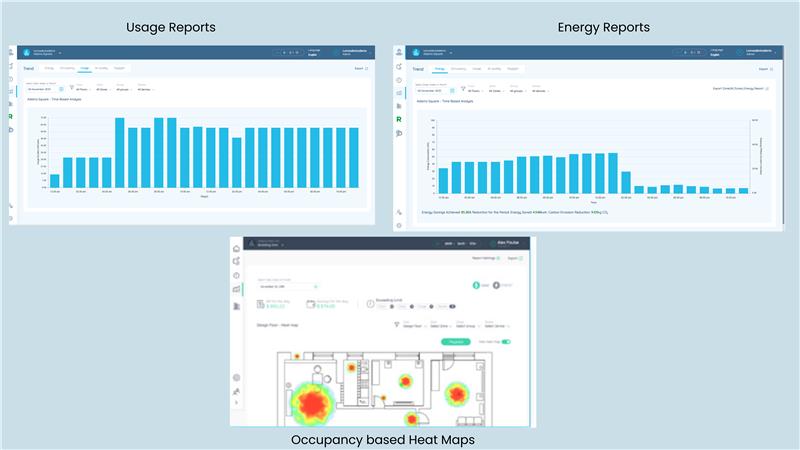
Turning Data into Action
Collecting data is only the first step. The real value lies in how it is used.
Lumos Controls, together with our EU partners, supports customers in interpreting and applying these reports in a practical way. This includes:
• Identifying inefficiencies and optimization opportunities
• Aligning building performance with EPBD requirements
• Supporting reporting and compliance processes
• Enabling smarter operational decisions
This ensures that insights are not just available, but actionable.
Aligning with BACS Principles
This approach closely aligns with BACS (EN 52120) principles, where building systems are valued for their ability to support energy performance through:
• Continuous monitoring
• Intelligent analysis
• Automated control
In this context, lighting systems are no longer evaluated only on efficiency, but also on how effectively they contribute to overall building performance.
Lighting as an Active Energy Player
One of the biggest shifts is conceptual.
Lighting is no longer just a load. It is becoming an active part of energy management.
By combining sensing, connectivity, and analytics, lighting systems can:
• Support compliance with evolving regulations
• Provide actionable insights for facility managers
• Enable smarter, more adaptive buildings
Moving Forward
As commercial buildings continue to evolve, lighting and sensing will play a critical role in shaping smarter environments.
With the right tools and support, such as Lumos Controls’ reporting capabilities and collaboration with EU partners, it becomes easier to move from raw data to meaningful action. From system design to implementation and ongoing optimization, this approach helps ensure buildings are not only efficient, but also future-ready.
In the end, it is not about having more data. It is about using the right data, in the right way, to make buildings perform better.