












Dual Tech Sensors: PIR + Ultrasonic for Smarter Occupancy Control
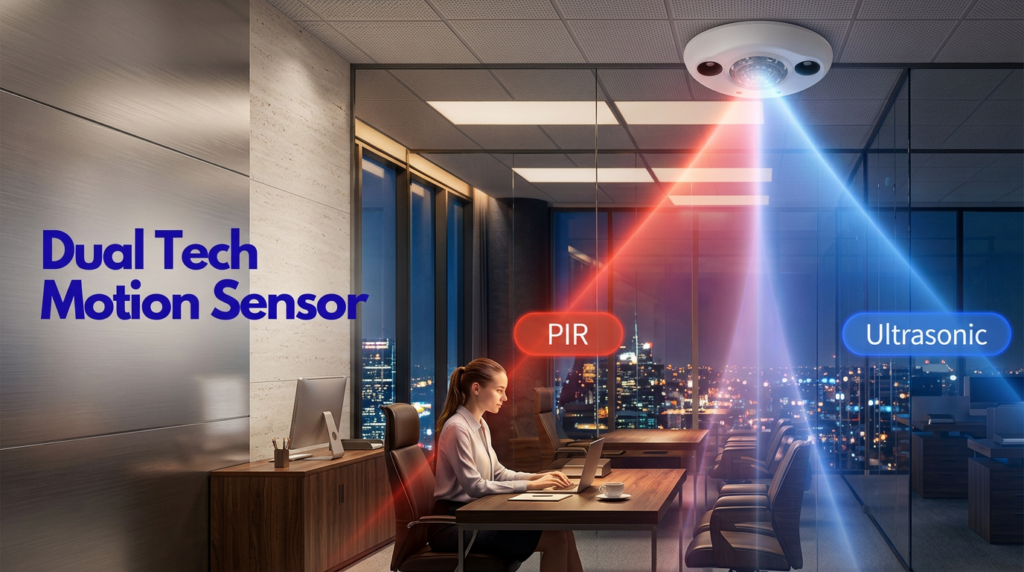
Smarter Sensing for Modern Commercial Spaces
As buildings continue to focus on efficiency, automation, and occupant comfort, occupancy sensors have become a key part of intelligent lighting control systems. But not all sensing technologies perform the same in every environment.
Some spaces require more accurate presence detection than standard motion sensors can provide. That is where Dual Tech Sensors from Lumos Controls offer a smarter solution.
By combining Passive Infrared (PIR) and Ultrasonic sensing in one device, Lumos Controls dual tech sensors provide dependable occupancy detection, improved energy savings, and better user experience.
What Is a Dual Tech Sensor?
A dual technology sensor uses two separate sensing methods:
- PIR (Passive Infrared) detects motion based on body heat movement
- Ultrasonic detects occupancy using high-frequency sound waves that sense subtle movement within a space
Together, these technologies help the sensor make more accurate occupancy decisions than a single technology device.
Why Combine PIR and Ultrasonic?
Each technology has strengths on its own.
PIR Strengths
- Highly effective at detecting clear occupant movement within defined coverage zones
- Energy-efficient sensing technology with low operating power requirements
- Reliable for entry, exit, and regular walking movement detection
- Provides reliable detection in open areas with direct line-of-sight coverage.
- Well suited for offices, corridors, classrooms, and restrooms
- Proven and widely adopted solution for commercial lighting control applications
- Controlled detection zones help minimize unintended activations outside the target area
Ultrasonic Strengths
- Highly effective at detecting fine movement, even when occupants are seated or partially obstructed
- Detects subtle activity such as typing, writing, or hand movement
- Excellent for spaces with partitions, cubicles, or furniture barriers
- Covers enclosed rooms more uniformly than directional sensing methods
- Well suited for conference rooms, meeting rooms, and break rooms
- Helps maintain occupancy detection during quiet tasks
- Responsive sensing for spaces with intermittent or low movement activity
Key Benefits
1. Better Occupancy Accuracy
PIR detects movement entering the space, while ultrasonic sensing helps maintain occupancy detection during seated or minimal activity.
This reduces missed detection events.
2. Fewer False Off Events
No one wants lights switching off during a meeting or while quietly working.
Dual tech sensing helps keep lights on when rooms are genuinely occupied.
3. Improved Energy Savings
Lights turn off when areas are vacant, helping reduce unnecessary runtime and wasted energy.
4. Wireless Installation Flexibility
Wireless sensors simplify deployment in both new construction and retrofit projects.
Benefits include:
- Faster installation
- Less wiring disruption
- Cleaner upgrades
- Easier repositioning when layouts change
5. Seamless Integration
Lumos Controls wireless dual tech sensors can integrate into connected lighting control systems, helping create a responsive and scalable smart building environment.
Supporting Energy Standards and Smart Building Goals
Many commercial facilities aim to reduce operating costs and improve building efficiency.
Dual tech sensors help support these goals by:
- Automating lighting shutoff in vacant areas
- Reducing lighting runtime
- Improving occupancy control performance
- Supporting sustainability objectives
- Enhancing user comfort without wasted energy
- When occupancy sensing needs to be more accurate, responsive, and efficient, dual technology makes the difference.
- By combining PIR + Ultrasonic, Lumos Controls Wireless Dual Tech Sensors provide the reliability modern buildings need to save energy and improve occupant experience.
- For spaces where standard motion sensing is not enough, dual tech is the smarter choice.
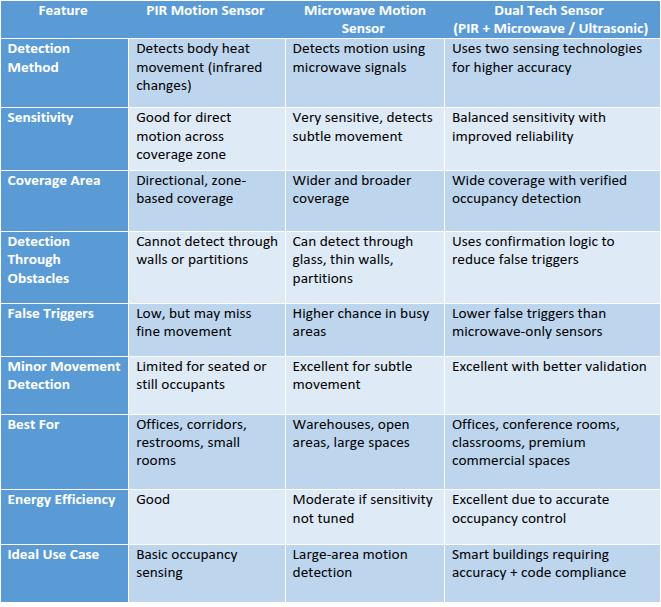
Understanding the Difference: PIR vs Microwave vs Dual Tech Motion Sensors
Looking to upgrade your occupancy controls?
Connect with Lumos Controls to explore wireless sensing solutions designed for smarter buildings.