












How the Latest Updates in U.S. Energy Codes are Changing Lighting Sensor Strategies
Modern energy codes are rapidly shifting toward intelligent, occupancy-driven lighting automation making occupancy and vacancy sensors essential for every high-performance building.
From IECC and ASHRAE 90.1 to California Title 24, the latest updates are pushing for smarter, more connected lighting control strategies focused on energy efficiency, occupant comfort, and building intelligence
Latest US Energy Code Updates Driving Smarter Lighting
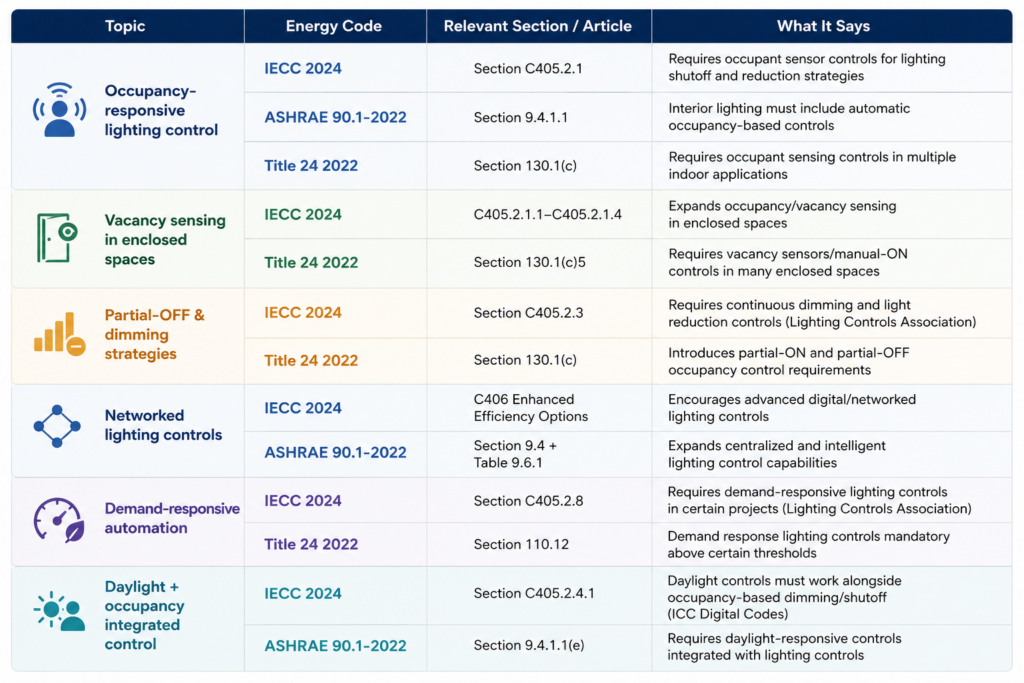
Understanding the Sensor Requirements in Modern Energy Codes
Private Offices, Conference Rooms & Classrooms
Recommended Sensor
✅ Dual-Tech Vacancy Sensors (PIR + Ultrasonic)
Why
- Detects both major and minor movement
- Prevents false OFF events in seated spaces
- Supports manual-ON / auto-OFF requirements

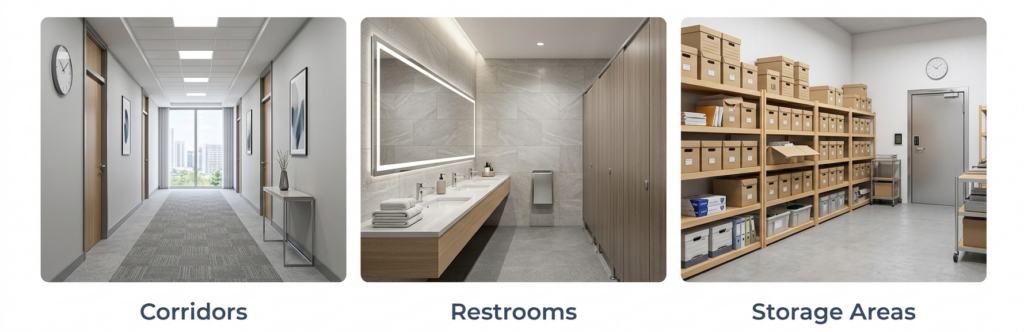
Corridors, Restrooms & Storage Areas
Recommended Sensor
✅ PIR Occupancy Sensors
Why
- Ideal for open spaces with clear line of sight
- Reliable and cost-effective
- Best for continuous movement areas
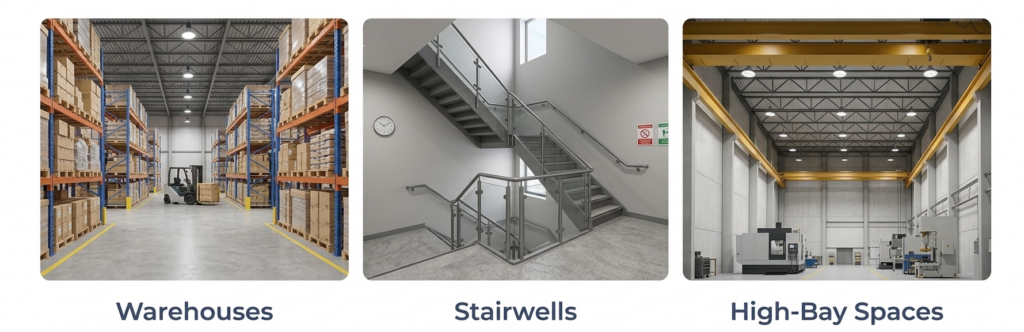
Warehouses, Stairwells & High-Bay Spaces
Recommended Sensor
✅ Microwave Occupancy Sensors
Why
- Covers large areas and high ceilings
- Detects movement over longer distances
- Suitable for industrial applications
How to Use Daylight Sensors Correctly
Recommended Use
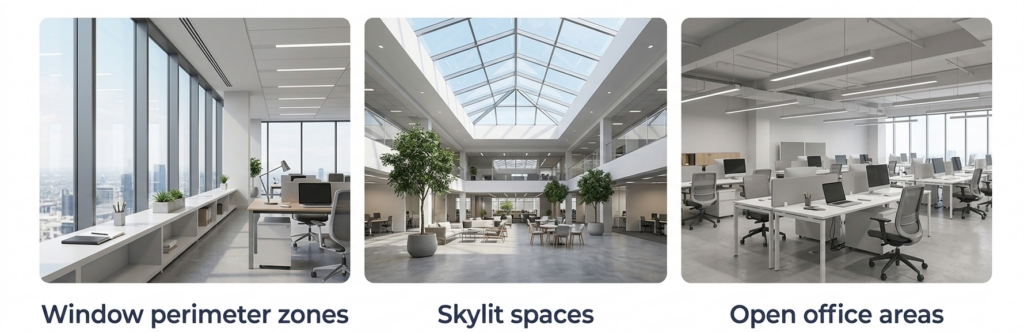
✅ Install daylight sensors in:
As buildings become more connected and energy conscious, sensing technologies are playing a critical role in lighting automation strategies. Intelligent occupancy and vacancy sensing not only reduce operational costs but also contribute to more sustainable and user friendly environments.
Best Practice
- Combine daylight sensors with occupancy sensors
- Use daylight harvesting to dim lights when natural light is sufficient
- Avoid placing sensors in direct sunlight
Final Takeaway
The latest US energy codes clearly show that lighting compliance is no longer just about automatic shutoff.
The codes now prioritize:
- Occupancy-responsive automation
- Vacancy-based energy savings
- Daylight-integrated dimming
- Intelligent sensor-driven control strategies
Choosing the correct sensor technology for each application is critical for:
- IECC compliance
- ASHRAE 90.1 compliance
- Title 24 compliance
- Energy savings
- Occupant comfort
- Smart building perform