












How Poor Indoor Air Quality Is Becoming a Silent Risk—And Why Every Building Should Be Monitoring It
Introduction
Earlier this year, the American Lung Association highlighted a concerning finding in its latest State of the Air report: 46% of children in the United States are living in areas with unhealthy levels of air pollution. The report reinforces a growing body of research showing that poor air quality can affect respiratory health, cognitive development, and overall well-being, particularly in children whose lungs are still developing.
This isn’t just a U.S. concern.
The World Health Organization (WHO) estimates that household and indoor air pollution contributes to millions of premature deaths every year, while studies across schools, offices, healthcare facilities, and commercial buildings continue to show that indoor air often contains pollutants that occupants cannot see or smell.
The first step toward healthier buildings is simple:
Measure the air before it becomes a problem.
Why Air Quality Monitoring Matters
Indoor air is constantly changing.
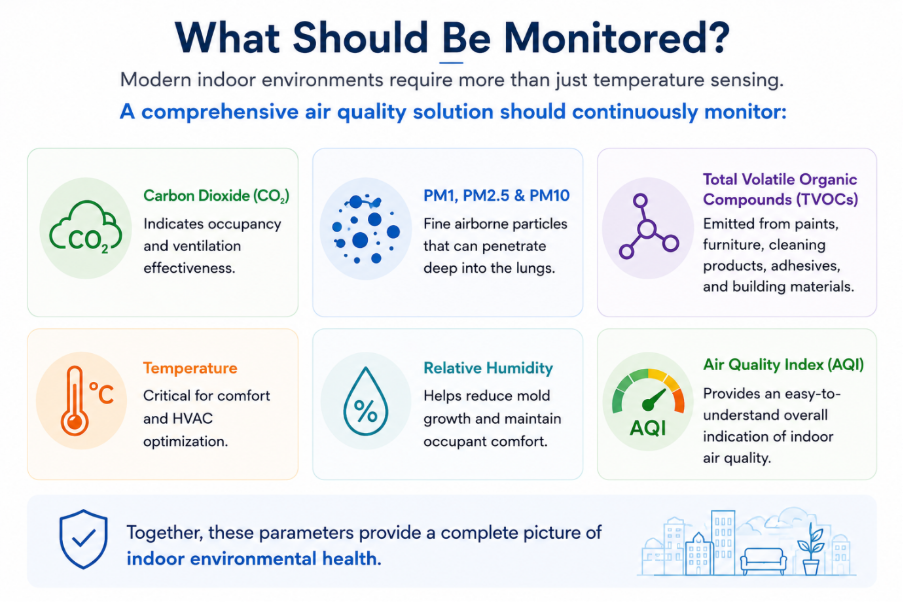
People entering a room, poor ventilation, cleaning chemicals, cooking, printers, furniture, HVAC performance, outdoor pollution, and occupancy levels all influence the air we breathe.
Without continuous monitoring, these changes often go unnoticed until occupants begin experiencing symptoms such as:
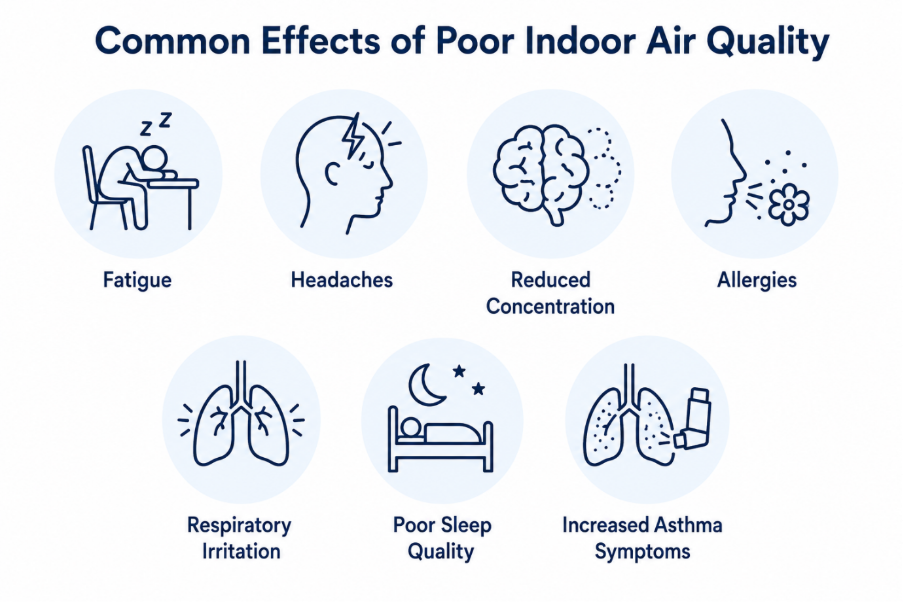
An air quality monitor provides real-time visibility into these invisible conditions, allowing facility managers to respond before occupant comfort and health are affected.
Meet Cyrus AQ: Intelligent Indoor Air Quality Monitoring
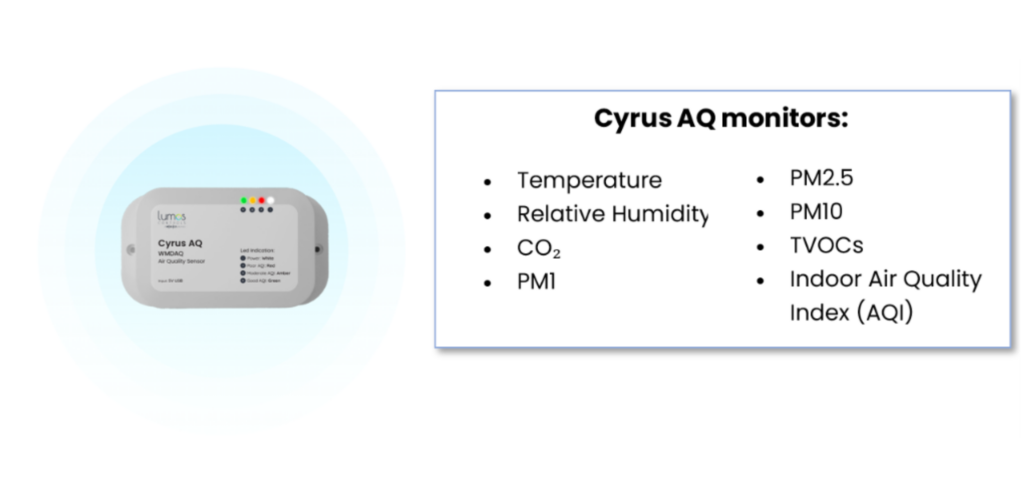
Instead of relying on periodic inspections, building operators receive continuous, live environmental data that helps identify trends before they impact occupants.
The Future of Smart Buildings Starts with Healthy Air
Lighting, HVAC, occupancy, energy, and security are all essential building systems—but the quality of the air occupants breathe every day deserves equal attention.
Research continues to remind us that indoor air quality directly influences health, productivity, and well-being. With intelligent sensing and centralized visibility, organizations can move from reacting to complaints to proactively managing healthier indoor spaces.
With Cyrus AQ, Lumos Controls helps transform invisible environmental data into actionable insights, enabling buildings that are not only smarter, but healthier too.