












Beyond Smart Devices: The Rise of Connected Building Intelligence
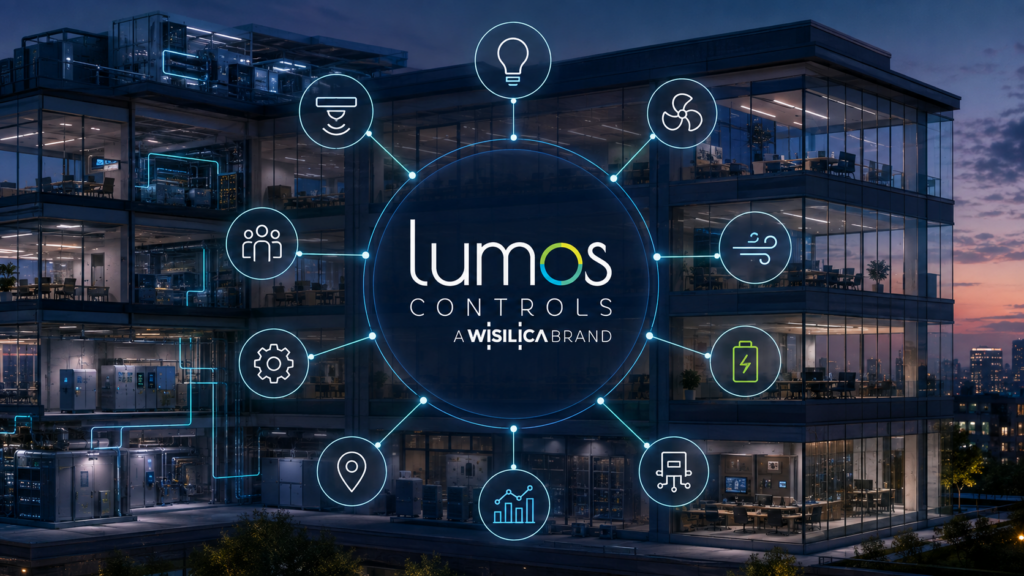
How connected systems turn building data into coordinated action, measurable performance, and smarter decisions.
A modern commercial building can contain hundreds of connected devices—lighting controllers, occupancy sensors, HVAC equipment, indoor air quality sensors, energy meters, asset trackers, and building management systems.
But there is a fundamental problem:
Smart devices do not automatically create a smart building.
When each system operates independently, valuable building data remains trapped in separate platforms. Facility teams may have one dashboard for lighting, another for HVAC, another for energy, and separate applications for occupancy, indoor air quality, or asset tracking.
The result is fragmented data, disconnected automation, and growing operational complexity.
More Systems Can Mean More Complexity
Building projects often rely on different vendors for different functions. One vendor handles lighting, another manages HVAC, while others provide sensors, asset tracking, analytics, or BMS integration.
Although each system may work effectively on its own, managing them together can become difficult.
Facility teams may have to deal with:
- Multiple vendors, contracts, and support teams
- Separate platforms and dashboards
- Higher integration and maintenance costs
- More complex troubleshooting and system management
- Inconsistent data across different applications
- Greater dependence on custom integrations
Customization can also become challenging. A change that affects several systems may require coordination between multiple vendors—or may not be technically possible at all.
Even when a new requirement can be implemented, the integration work, testing, vendor coordination, and approvals can significantly increase the lead time.
As the building grows, organizations may find themselves adding another standalone system every time a new need arises. Instead of becoming more intelligent, the building becomes more complicated.
What If Your Building Systems Could Talk to Each Other?
Imagine a conference room becomes vacant.
With disconnected systems, the occupancy sensor may turn off the lights—but that is where the intelligence ends.
With connected building intelligence:
Room becomes vacant → Lighting responds → HVAC adjusts → Space utilization updates → Energy data is captured
One simple signal can trigger several coordinated actions across the building.
That is the difference between a building containing smart devices and a truly intelligent building.
From Connected Devices to Connected Decisions
The real value of sensors is not simply collecting more data.
It is using that data to make better decisions.
Occupancy information can help optimize lighting and HVAC operation. Indoor air quality data can help the building respond to changing environmental conditions. Asset location data can help organizations understand where equipment is and how it is being used.
Energy and utilization insights can show facility teams where a building is performing well, where resources are being wasted, and where improvements can be made.
When this information comes together, building automation becomes more responsive, measurable, and useful.
One Platform. One View of the Building.
This is where Lumos Controls comes in.
Lumos Controls brings lighting, HVAC, sensors, occupancy, indoor air quality, energy management, asset tracking, analytics, and BMS integration together within one connected ecosystem.
Instead of managing isolated systems from multiple platforms, facility teams can move toward a unified view of building operations and performance.
This connected foundation also makes future expansion easier.
When project requirements grow, organizations can extend capabilities that are already part of the platform instead of adding another standalone system alongside the existing infrastructure.
This can help reduce vendor complexity, simplify system management, support customization, and shorten the path from a new requirement to implementation.
Sense. Connect. Automate. Optimize.
Sense what is happening throughout the building.
Connect information across devices and systems.
Automate coordinated responses based on real-time conditions.
Optimize performance using the resulting data and insights.
Why This Matters
A smart building should not only tell facility teams what is happening.
It should help them do something about it.
That is the shift from traditional building automation to building intelligence.
Whether it is a new construction project or an existing facility, Lumos Controls helps bring building systems together to create spaces that are:
- More energy efficient
- More responsive to real-time conditions
- Easier and less costly to manage
- More comfortable for occupants
- Better informed by operational data
- Easier to customize and expand
- Ready to support future requirements
The Future of Smart Buildings Is Not More Standalone Systems
It is better connections between the systems you already have—and a flexible foundation for what comes next.